Smart Meter Light: Why Germany Needs a Technology-Neutral Rollout
30 min
Smart Meter Light is a concept announced by the German federal government in July 2026 but not yet defined in legal or technical terms – for electricity customers who are not covered by the mandatory smart meter rollout. According to a coalition resolution, it is intended to enable these customers to optimize their electricity bills in a cost-effective and cybersecurity-compliant manner. It remains unclear which technology will be used, what functions the system is intended to fulfill, and how it will differ from Germany’s existing smart metering system.
This article argues against developing Smart Meter Light as a stripped-down version of the smart meter gateway. Instead, a technology-neutral and risk-based rollout path should be established that distinguishes between pure measurement data collection, regulated market communication, and grid-critical control.
The Smart Meter Gateway remains a central component for communication and control functions that require special protection. For less critical metering applications, however, secure, interoperable, and migration-ready alternatives should also be permitted.
For many years, I have been working on the digitalization of critical infrastructure. Smart metering, in particular, highlights how difficult it is to balance the highest security requirements, cost-effectiveness, and a rapid, nationwide rollout. “Smart Meter Light” offers the opportunity to better reconcile these goals in the future.
What is Smart Meter Light?
The term “Smart Meter Light” was officially announced by Germany’s governing coalition following the coalition committee meeting on July 2, 2026. The coalition agreed to establish a cost-effective and cyber-secure solution for electricity customers in Germany who are not covered by the mandatory smart meter rollout under German law. At the same time, the coalition aims to achieve a rollout rate of more than 90 percent across all relevant metering points in Germany by the end of 2030.
There is currently no legal definition of “Smart Meter Light” under German law. Neither the technical architecture nor the scope of functions nor the required security certifications have been finalized.
This is precisely where an opportunity lies: “Smart Meter Light” should not be hastily defined as a single product or as a simplified smart meter gateway. It would make more sense to establish an additional regulatory rollout path that describes specific functions and risks.
The key questions, therefore, are:
What measurement data is collected?
For what purpose is it used?
Who is authorized to access the data?
Is the data used solely for visualization or also for billing purposes?
Is system control planned?
What level of security is required for the specific use case?
Only after these requirements have been identified should a decision be made as to which technical solution can be implemented.
Smart Meters, Modern Metering Systems, iMSys, and Smart Meter Gateways Explained
The terms related to smart metering are used differently in Germany and internationally. To properly understand rollout rates, technologies, and regulatory requirements, it is therefore necessary to distinguish between four terms: smart meter, modern metering device, intelligent metering system, and smart meter gateway.
What is a smart meter?
A smart meter is generally defined as a digital meter that electronically records meter readings and can transmit them via a communication interface. Depending on the system, it enables, for example, remote reading of consumption data, detailed consumption analysis, or the use of time-of-use electricity rates.
However, the technical and security requirements that a smart meter must meet vary from country to country. In many European countries, the communication unit is already integrated directly into the digital electricity meter. The data is transmitted via powerline communication, cellular networks, or wireless networks, for example.
In Germany, the term “smart meter” is often used colloquially to refer to an intelligent metering system. However, the German regulatory framework distinguishes more precisely between the modern metering device, the smart meter gateway, and the resulting intelligent metering system.
What is a modern measuring system?
A modern metering device, or mME for short, is a digital electricity meter. It records electricity consumption and displays, among other things, the current meter reading and historical consumption data digitally.
On its own, the modern metering device is not yet integrated into a communication network. It therefore cannot automatically transmit metering data to metering point operators, energy suppliers, or other authorized market participants.
Only when connected to a smart meter gateway does the modern metering device become part of a smart metering system.
What is a smart metering system?
Under the German regulatory framework, an intelligent metering system – or iMSys for short – consists of two key components:
a modern metering device for recording meter readings and
a smart meter gateway that serves as a secure communication unit.
The modern metering equipment records electricity consumption. The smart meter gateway processes and transmits the metering data via a secure communication connection. It is only the combination of these two components that constitutes the smart metering system.
A German smart metering system is thus more than just a digital electricity meter with remote reading capabilities. It is part of a comprehensively regulated infrastructure for metering data, market communication, and, in the future, grid-supporting control functions.
What is the function of the smart meter gateway?
The smart meter gateway is the central communication and security unit of the smart metering system. It connects the modern metering equipment to authorized external market participants and ensures that metering data is processed and transmitted securely.
Its functions include, among others:
the secure collection and processing of measurement data,
encrypted communication with authorized recipients,
the authentication of devices and market participants,
the management of access permissions,
and integration into regulated market communications.
The German system adheres to comprehensive guidelines on data protection, information security, interoperability, certification, and operation. Among other features, the smart meter gateway includes an integrated security module and uses encryption, digital signature, and authentication methods.
Why International Comparisons Are Difficult
Internationally, the term “smart meter” is often used in a broader sense. In many countries, a digital meter with an integrated communication interface is already considered a smart meter – regardless of whether the data is transmitted via power line communication, cellular networks, RF mesh, or another technology.
Features such as remote reading, consumption transparency, or support for time-of-use rates may be sufficient in those countries to classify a device as a smart meter.
Rollout rates across different countries can therefore only be compared if the respective definitions, scope of functions, and underlying technical architecture are also taken into account. A device designated as a “smart meter” internationally does not automatically correspond to the German intelligent metering system with a smart meter gateway.
Why the Smart Meter Rollout Needs to Be Accelerated
In recent years, Germany has established a highly regulated and security-focused smart meter infrastructure. However, this level of security comes with complex certification, installation, and operational processes.
As of December 31, 2025, according to the Federal Network Agency, approximately 3.09 million smart metering systems had been installed. This corresponded to 5.5 percent of all registered metering locations. Among the mandatory installation cases considered by the Federal Network Agency, the installation rate was 23.3 percent. These two figures are based on different populations and should therefore not be confused with one another.
At the same time, the energy system is changing rapidly. Photovoltaic systems, battery storage, heat pumps, wallboxes, dynamic electricity rates, and local energy communities are increasing the demand for up-to-date metering data.
Digital measurement data form the basis for:
greater transparency in energy consumption,
dynamic and time-varying rates,
automated billing processes,
flexibility programs,
energy sharing,
grid-friendly consumption patterns,
and data-driven energy services.
However, not all of these applications require a platform for highly critical control right from the start. For many use cases, the initial priority is secure, reliable, and cost-effective measurement data acquisition.
Measurement and Control Require Different Levels of Security
The crux of the “Smart Meter Light” debate lies in distinguishing between different functions.
A household that wants to visualize its electricity consumption in an app has different requirements than an energy supplier that processes meter readings for billing purposes. Even higher requirements arise when grid operators control heat pumps, charging stations, or generation facilities to support the grid.
This is not to say that measurement data should generally be classified as non-critical. Measurement applications also require data protection, integrity, authentication, and reliable transmission. However, the required level of security should be commensurate with the specific function and the potential extent of damage.
Function | Example | Key Requirements | Possible Rollout Path |
| Local Energy Consumption Transparency | Display in an app or an energy management system | Data Protection, Access Control, Data Integrity | Secure Local or Remote Measurement Solution |
| Remote Reading | Consumption Monitoring and Optimization | Encryption, Authentication, Availability | Technology-Agnostic Measurement Communication |
| Billing and Rates | Dynamic Electricity Rate | Measurement Accuracy, Traceability, Reliable Transmission | Regulated and Interoperable Measurement Solution |
| Market Communication | Exchange with Authorized Market Participants | Standardized Processes, High Integrity, Secure Identities | Intelligent Measurement System or an Equivalently Controlled Path |
| Network Control | Control of Heat Pumps, Wall Boxes, or PV Systems | High Availability, Integrity, Protection Against Attacks, and Secure Control Commands | Smart Meter Gateway with Control Unit |
A risk-based approach therefore does not mean sacrificing security. It means tailoring security measures specifically to the function in question.
Technology-Agnostic Smart Metering: Requirements Rather Than Architectural Constraints
A technology-neutral rollout does not mean that just any technical solution should be approved. Technology neutrality only works within the framework of clear functional and security requirements.
Smart Meter Light solutions should meet at least the following criteria:
Secure and tamper-proof measurement data collection,
encrypted data transmission,
unique device and user identities,
mutual authentication,
role-based access rights,
data protection and data minimization,
secure software and firmware updates,
documented vulnerability management,
standardized interfaces and data models,
technical and organizational interoperability,
long-term update and operational capability,
logging of security-related events,
migration capability to a smart metering system.
The specific technology that meets these requirements should deliberately remain open. Competition and innovation do not arise when lawmakers prescribe a specific wireless or communications solution. They arise from binding goals, verifiable security requirements, and open interfaces.
The Right Communication for Each Location
Meters are often located in basements, utility shafts, or utility rooms. From a wireless communications perspective, these locations present challenges. A technology that works reliably at one meter location may be unsuitable at another.
The following communication channels, among others, are suitable for technology-neutral smart metering:
| Technology | Possible Use Cases | Factors to Consider |
Powerline Communication | Electricity Meters and Extensive Service Areas | Power Grid Quality, Outages, and Grid Topology |
LoRaWAN | Electricity, Water, Gas, Heat, and Submetering | Building Penetration, Gateway Coverage, and Network Operations |
NB-IoT or LTE-M | Mobile-Based Meter Communication | Network coverage, deep-indoor reception, and ongoing connectivity costs |
RF-Mesh | Mesh Metering Networks | Device Density, Network Planning, and Maintenance |
Wireless M-Bus | Building and Submetering Applications | Reach, Data Collection Infrastructure, and Operating Model |
mioty | Highly Scalable Industrial Sensor Networks | Infrastructure, Device Availability, and Integration |
Ethernet or Fiber Optic Internet | Technical facilities and well-connected locations | Cabling costs and existing infrastructure |
The selection should be based on the specific location of use. Building penetration, energy consumption of the end devices, existing networks, scalability, maintenance requirements, and operating costs must all be considered together.
Today, it is no longer a matter of finding a single, universal communication technology. The key is to combine established technologies to create a secure and cost-effective solution for the specific use case.
An Open Approach to Technology Must Not Become a Dead End
A common counterargument is that Smart Meter Light solutions installed initially would have to be completely replaced later on, as soon as an intelligent metering system or control device becomes necessary.
This concern is valid. However, it does not fundamentally argue against an additional rollout path, but rather in favor of mandatory requirements for interoperability and migrability.
Smart Meter Light solutions should be designed with a modular structure from the outset. Standardized interfaces and uniform data models must make it possible to expand an existing metering solution later or to combine it with a smart meter gateway.
This would allow for the initial installation of a cost-effective solution for digital consumption tracking. If a need for regulated market communication or grid-critical control arises later, the infrastructure can be expanded to include the necessary components.
A technology-neutral rollout would thus not be a counter-model to the smart metering system. It could serve as an earlier stage of digitization that is further developed as functional requirements grow.
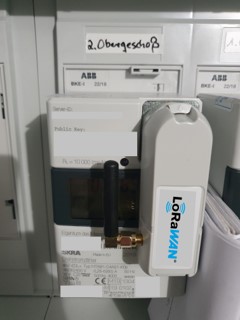
Since 2019, I have been using a LoRaWAN-enabled optical sensor to automatically collect my electricity consumption data. The optical sensor attaches magnetically to the optical interface of the modern metering device and reads the meter readings without interfering with the meter.
If a smart meter gateway is installed later, the optical head can be removed without tools. This example demonstrates how an existing infrastructure can be digitally enhanced early on without hindering a future transition to a smart metering system.
IT Security Is More Than Just a Single Certification
The smart meter gateway achieves a particularly high and consistent level of security through security profiles, technical guidelines, certification, and a regulated operating model. This approach remains of great importance for critical market communication and control functions.
However, this does not mean that only a smart meter gateway can be operated securely. Modern IoT architectures can also achieve high levels of security. The prerequisite is that security is considered not only at the transmission level, but throughout the entire product and operational lifecycle.
These include, for example:
Hardware Root of Trust,
Secure Boot,
end-to-end encryption,
mutual authentication,
secure key and certificate management,
signed software updates,
network segmentation,
zero-trust principles,
continuous security monitoring,
regulated vulnerability management,
and clearly defined operational responsibilities.
Not every IoT solution automatically meets these requirements. Whether a solution is suitable for a specific use case must be assessed based on its architecture, operating model, ability to be updated, and verifiable security credentials.
What Role Does the Cyber Resilience Act Play?
With the Cyber Resilience Act, the European Union is establishing a horizontal legal framework for products with digital elements. Among other things, manufacturers will be required to implement security by design, secure default configurations, vulnerability management, and security updates throughout the product lifecycle.
The majority of the regulation takes effect on December 11, 2027. Certain reporting requirements for actively exploited vulnerabilities and serious security incidents will take effect as early as September 11, 2026.
The Cyber Resilience Act does not replace either the Metering Point Operation Act or the sector-specific requirements for smart meter gateways. However, it can establish a Europe-wide baseline level of security upon which supplementary requirements for less critical metering applications can be built.
For Smart Meter Light, a combination is therefore a good option:
horizontal product safety under European law,
additional sector-specific requirements for energy data and measurement processes,
tiered verification requirements based on the risk associated with each specific use case.
The Smart Meter Rollout in Europe Shows That There Is Another Way
In Germany, the debate often proceeds as if there were only one technical solution for smart metering worldwide. However, a look beyond the country’s borders reveals a very different picture (see Chapter 4.1.3 of the Commission staff working document).
Land | Rollout | Typical Communication | Architecture |
Italy | ≈100 % | PLC | Integrated Smart Meter |
France | 94 % | PLC (Linky) | Integrated Smart Meter |
Sweden | ≈100 % | Mobile Communications / RF | Technology-neutral |
Great Britain | 70 % | Various Technologies | Central Communication Platform |
Germany | 2 % | Smart Meter Gateway | Up-regulated Smart Metering System (iMSys) |
It is interesting to note that other countries are achieving high rollout rates even though they use very different technical architectures. It is worth taking a closer look at the international comparison. This is because what is referred to as a “smart meter” in those countries does not correspond to the German intelligent metering system (iMSys) with a smart meter gateway (SMGW). In many countries, these are digital electricity meters with an integrated communication interface, such as Powerline Communication (PLC), LoRaWAN, RF-Mesh, NB-IoT, or other IoT technologies. They enable remote reading, time-varying rates, and consumption transparency, but generally do not feature the highly complex security and control architecture of the German smart meter gateway. Germany is thus pursuing an approach that is virtually unique worldwide, in which metering, secure market communication, and grid-optimized control are integrated into a single platform.
Italy began rolling out digital electricity meters nationwide as early as the early 2000s and primarily uses Powerline Communication (PLC) for communication between meters and the grid.
France is taking a similar approach with the Linky system and has now digitized more than 90 percent of all households.
The Scandinavian countries combine different technologies – such as PLC, cellular networks, or RF mesh – depending on the grid area.
The United Kingdom, on the other hand, uses a central communication platform that integrates various transmission technologies.
The common thread among all these countries is remarkable: The focus was not on a specific technology, but rather on the goal of implementing the rollout as quickly, cost-effectively, and comprehensively as possible.
How the Metering Point Operations Act Could Become More Technology-Neutral
The smart meter gateway should not be eliminated. Rather, the existing system should be supplemented with an additional rollout path. In my view, the Metering Point Operations Act should reflect the following principles in the future:
1. Classify use cases by function and risk
Local consumption display, remote meter reading, billing, market communication, and grid control should not automatically be subject to the same technical requirements.
2. Establish a clear roadmap for the Smart Meter Light rollout
For customers outside the mandatory iMSys rollout, a legally sound framework for cost-effective digital metering solutions should be established.
3. Define Minimum Functional Requirements
Legislators should define security objectives, data protection, interoperability, upgradeability, and operational requirements, but should not mandate a specific communication technology.
4. Require binding proof of security
An open approach to technology must not lead to unclear safety standards. Depending on the risk class, tiered testing, certification, or proof of compliance should be required.
5. Ensure Interoperability and Migration
Smart Meter Light solutions must be capable of being expanded, replaced, or combined with a smart meter gateway at a later date. Proprietary dead-ends should be avoided for regulatory reasons.
6. Maintain the smart meter gateway for critical functions
The smart meter gateway remains a central component of the infrastructure for highly critical control functions, secure market communication, and grid-related interventions.
7. Ensure transparency regarding costs and rollout progress
In addition to installation figures, installation costs, operating expenses, failure rates, and the actual benefits for consumers and the energy system should also be taken into account.
A Call to Policymakers: More Room for Innovation Through Regulatory Sandboxes
The debate over “Smart Meter Light” is currently being conducted primarily on a theoretical level. Proponents see it as an opportunity for a faster and more cost-effective rollout, while critics warn of security risks, a lack of interoperability, migration issues, and fragmentation of the infrastructure. However, many of these arguments cannot be definitively proven or disproven at this time – because there is a lack of practical experience on a large scale.
In my view, policymakers should therefore take a different approach: Instead of spending years debating hypothetical scenarios, they should create time- and region-limited innovation zones for smart metering. An experimental provision in the Metering Point Operations Act could enable selected regions to deploy “smart meter light” solutions—which are already available and market-ready – under real-world conditions – provided, of course, that fundamental functional requirements for cybersecurity, data protection, interoperability, and migration capability are demonstrably met.
An independent council of experts should decide on the approval of new solutions, reaching a transparent “go/no-go” decision within a few weeks or requesting specific improvements. The evaluation would focus not on individual technologies, but on their proven characteristics and risks. This would allow innovations to be tested under real-world conditions much more quickly, without fundamentally calling into question existing high safety requirements.
The major advantage of such an approach is that technical issues would no longer be the subject of years-long debates over principles or lobbying discussions. Instead, key questions – such as those regarding cybersecurity, cost-effectiveness, data quality, portability, or acceptance – could be scientifically evaluated and answered using objective metrics. If an approach does not work, it is rejected. If it proves effective, it can serve as the basis for future regulatory decisions.
The energy transition calls for swift yet responsible decisions. Regulatory sandboxes would make this balancing act possible: allowing innovation where it makes sense, evaluating risks in a controlled manner, and basing future policy decisions more on evidence than on assumptions.
Conclusion: Keep the Smart Meter Gateway; Open Up the Meter Rollout
Germany does not have to choose between maximum security and a rapid smart meter rollout. Both can be combined if requirements are more closely aligned with functions and risks.
The smart meter gateway remains indispensable in situations where secure market communication, highly critical control, or grid-related interventions are required. However, for many applications focused solely on metering and transparency, technical solutions are already available today that can enable earlier and more cost-effective digitization.
“Smart Meter Light” should therefore not be viewed as a stripped-down version of the existing system. It should create an additional, clearly regulated, and migration-ready rollout path.
The core technologies for digital metering and secure communication already exist. The real challenge lies in deploying them in a way that is interoperable, secure, and comprehensive. After all, long-term added value does not come solely from the transmission of meter readings, but from their intelligent and responsible use.
A technology-neutral and risk-based regulatory approach can accelerate the smart meter rollout without compromising Germany’s high security standards for critical applications. In this way, Smart Meter Light could become a key building block for the next phase of the energy transition.
Frequently Asked Questions About Smart Meter Light
No. So far, Smart Meter Light is primarily a concept that has been announced at the political level. The coalition committee has stated its intention to establish a cost-effective and secure solution for customers outside the mandatory smart meter rollout. How exactly this will be implemented in legal and technical terms remains open at this stage.
Based on the political direction communicated so far, there are strong indications that it is not. Smart Meter Light is primarily intended for customers outside the mandatory smart meter rollout. From today’s perspective, it therefore seems more appropriate to view Smart Meter Light as a complement to the existing intelligent metering system rather than as a general replacement for the Smart Meter Gateway. However, the precise regulatory distinction has yet to be defined.
So far, the only clear political objective is to create a secure solution. The specific technical requirements and security assurances that will apply have not yet been defined. From a technical perspective, a risk-based approach would appear appropriate, with the required level of security determined by the functionality involved and the potential impact of a security incident. Whether such an approach will ultimately become part of the regulatory framework remains open.
At this point, this cannot yet be answered conclusively. The political communication to date has not specified a particular communication technology or system architecture. From a technical perspective, different technologies could therefore be considered, provided they meet the future requirements for security, data protection, metering and reliable operation.
Specific interoperability requirements have not yet been defined. In our view, however, interoperability should play an important role in the further development of Smart Meter Light. Open and standardized interfaces could help avoid proprietary lock-in and facilitate a later transition to an intelligent metering system. Whether such requirements will become mandatory will depend on the further regulatory process.